





Samsung Secures Massive Memory Deals as AI Demand Fuels Chip Shortage
Conventional DRAM also remains essential. It supports servers, computers, smartphones and numerous other electronic devices, making it a critical component throughout the technology industry.

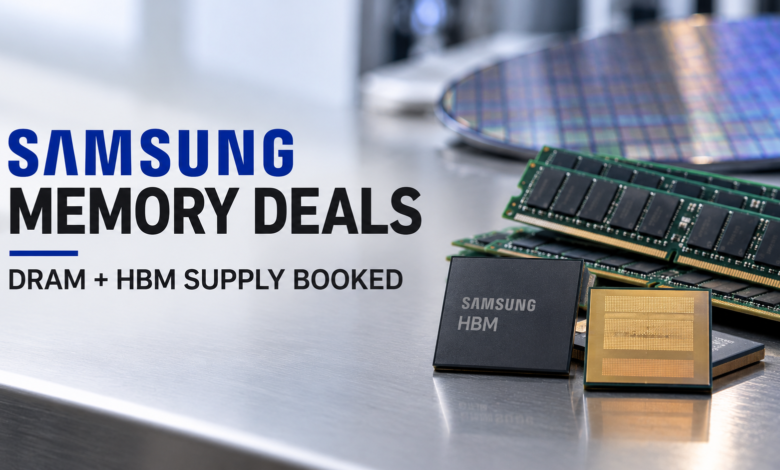
Samsung is reportedly locking in a massive share of its future memory chip production, as the artificial intelligence boom intensifies competition for essential semiconductor components. With major technology companies racing to secure supplies for AI servers and data centres, the South Korean giant has signed long-term agreements that could reshape the memory market and potentially make electronics more expensive for consumers.
According to recent industry reports, Samsung has secured buyers for a significant portion of its planned 2027 memory production. The agreements reportedly cover conventional DRAM and high-bandwidth memory (HBM), two critical technologies used in everything from smartphones and computers to advanced AI infrastructure.
The development highlights how rapidly demand for memory chips is changing. As companies invest heavily in artificial intelligence, securing a reliable supply of memory has become increasingly important, putting pressure on manufacturers and customers alike.
Samsung Reportedly Secures Most of Its 2027 Memory Supply
Samsung has reportedly signed five-year supply agreements with major technology companies, helping customers secure memory chips over an extended period.
According to the reported figures, around 70% of Samsung’s planned conventional DRAM supply for 2027 has already been reserved. Even more strikingly, the company is said to have secured buyers for its entire planned HBM output for the same year.
That leaves a much smaller portion of conventional DRAM production available for customers that have not already arranged long-term contracts. As demand continues to rise, companies competing for the remaining supply could face greater pressure to secure the components they need.
These figures come from industry reporting and have not been fully confirmed by Samsung as a complete breakdown of its production commitments. The precise customers, contract values and detailed terms have not been publicly disclosed.
Nevertheless, the reported agreements reflect a broader shift in the semiconductor industry. Rather than relying entirely on shorter purchasing cycles, major customers increasingly want predictable access to memory over several years.
Why AI Companies Need So Much Memory
The rapid growth of artificial intelligence is one of the biggest forces behind the current memory demand.
AI systems require substantial amounts of memory to process information, train models and deliver responses. Large data centres use specialised processors alongside high-performance memory to handle enormous workloads efficiently.
This is where high-bandwidth memory becomes particularly important. HBM is designed to transfer large amounts of data at high speed and is widely used alongside advanced AI accelerators.
Conventional DRAM also remains essential. It supports servers, computers, smartphones and numerous other electronic devices, making it a critical component throughout the technology industry.

As companies build more AI infrastructure, memory manufacturers must balance demand from data-centre operators with requirements from traditional electronics businesses. Long-term supply agreements can help customers secure the capacity they need before shortages become more severe.
For Samsung, these contracts could provide greater visibility into future demand and help the company plan production. For customers, they offer a degree of supply certainty in an increasingly competitive market.
HBM Prices Could Rise Sharply in 2027
The reported supply agreements come as memory prices are expected to increase further.
Industry estimates suggest that HBM prices could rise by approximately 150% to 200% in 2027, while conventional DRAM prices could also record double-digit increases in the first quarter of the year.
These figures are forecasts rather than confirmed price changes across every product or customer contract. Actual prices will depend on supply, demand, product generations, manufacturing costs and the terms negotiated between suppliers and buyers.
However, the outlook illustrates the pressure facing companies that depend on memory chips. When demand grows faster than manufacturers can expand production, customers may need to pay more to secure limited supplies.
HBM is especially important because advanced AI processors depend on its high data-transfer capabilities. As the industry moves towards newer generations of memory, including HBM4, manufacturers must also invest in more advanced production and packaging technologies.
Samsung could benefit from higher prices and strong demand, although the final financial impact will depend on its production costs, product mix and ability to deliver the contracted volumes.
Could Samsung Phones Become More Expensive?
The memory market’s changing conditions could also affect consumer electronics.
Samsung’s smartphone business needs memory components for its Galaxy devices, just as other smartphone manufacturers need DRAM for their products. If memory prices rise, manufacturers may face higher production costs.
Those costs can influence retail pricing, particularly when companies cannot offset them through manufacturing efficiencies or other savings.
The upcoming Galaxy S27 series could therefore face pricing pressure if the reported increases continue into 2027. However, higher Galaxy S27 prices have not been officially confirmed, and it is too early to determine whether Samsung will pass any additional costs directly to consumers.
Smartphone pricing depends on several factors, including component costs, exchange rates, regional taxes, competition and a company’s pricing strategy.
The effects could extend beyond Samsung. Other smartphone brands, computer manufacturers and electronics companies may also need to reconsider their pricing if memory remains expensive.
Consumers planning to upgrade their devices in 2027 may want to pay attention to official announcements and retail pricing rather than assuming that every upcoming product will become more expensive.
Competition for Memory Is Getting More Intense
Samsung is not the only memory manufacturer responding to the AI boom. Other major semiconductor companies are also competing to supply the components required by data centres and advanced computing systems.
The result is an increasingly competitive market in which large customers want to reserve capacity well ahead of time.
Long-term contracts can help manufacturers forecast demand and support investment planning. They can also give customers greater confidence that critical components will be available when needed.
However, such agreements can reduce the amount of production available for customers that have not secured supplies in advance. Smaller businesses may find it more difficult to compete with technology companies that have larger budgets and long-term purchasing commitments.
The reported competition for Samsung’s remaining DRAM capacity demonstrates how important advance planning has become. Companies that depend on memory may increasingly need to negotiate supply agreements earlier to reduce the risk of shortages.
What This Means for Samsung’s Business
For Samsung, securing long-term buyers could strengthen revenue visibility and help support its semiconductor operations.
The company’s memory business is benefiting from demand for both conventional DRAM and specialised HBM products. Long-term agreements could help Samsung plan manufacturing capacity while responding to the needs of major technology customers.
At the same time, the company must balance its semiconductor business with its consumer electronics operations. Samsung’s smartphone division depends on memory supplied by the broader semiconductor market, meaning higher component prices can create challenges even within the same corporate group.
The reported contracts therefore illustrate both the opportunities and complications created by the AI boom. Strong demand can improve business prospects for memory manufacturers, but it can also increase costs for companies that use memory in finished products.
The Memory Market’s Next Big Challenge
Samsung’s reported memory deals show how the AI industry is reshaping the semiconductor supply chain. With much of its expected 2027 output reportedly reserved, the company is positioning itself to meet demand from major technology customers while competing for a share of the growing AI infrastructure market.
The biggest question now is whether manufacturers can expand production quickly enough to ease supply constraints without creating new imbalances elsewhere in the industry.
If demand continues to outpace supply, memory prices could remain elevated, potentially affecting smartphones, laptops, computers and other consumer electronics. If production catches up more quickly than expected, some of that pricing pressure could ease.
For now, Samsung’s reported agreements underline a clear trend: memory has become an increasingly strategic resource in the AI era. The consequences will reach far beyond data centres, potentially influencing the cost and availability of everyday technology products in the years ahead.