





iQOO 16 Arrives With Flagship Power and a Massive Battery
The iQOO 16 features a 6.85-inch Samsung M16 AMOLED display with a 3168 × 1440 resolution and an adaptive refresh rate reaching 165Hz.

What happens when a flagship smartphone puts extreme performance, a 165Hz display and an enormous battery into the same package? iQOO now has an answer.
The company has officially launched the iQOO 16 in China, bringing together Qualcomm’s latest Snapdragon 8 Elite Extreme Gen 6 processor, a high-refresh-rate Samsung display and an 8,400mAh battery aimed squarely at demanding users.
The new smartphone is built with gaming and sustained performance in mind. Alongside its flagship chipset, iQOO has added a dedicated Q4 gaming chip and a large vapor chamber cooling system, creating a hardware combination designed to keep demanding workloads running smoothly.
A Display Built for Speed
The iQOO 16 features a 6.85-inch Samsung M16 AMOLED display with a 3168 × 1440 resolution and an adaptive refresh rate reaching 165Hz.
That puts the screen firmly into high-performance territory, particularly for users who spend a significant amount of time gaming or consuming fast-moving content.
The panel also supports up to 5,000Hz instantaneous touch sampling, while iQOO claims full-screen brightness of up to 2,800 nits and local peak brightness reaching 10,000 nits under specific conditions. High-frequency PWM dimming and full-brightness DC dimming are also included.
The combination of resolution and refresh rate gives the iQOO 16 a display designed to balance sharp visuals with smooth movement. The company has also introduced Q-flex technology, which is designed to reduce touch-control latency by coordinating several parts of the input process.
Snapdragon Power Meets Dedicated Gaming Hardware
At the heart of the iQOO 16 is Qualcomm’s Snapdragon 8 Elite Extreme Gen 6, manufactured using a 2nm process. The processor can reach clock speeds of around 5GHz, putting the phone among the first generation of Android flagships built around Qualcomm’s latest high-end silicon.
But iQOO has not stopped with the main processor. The phone also includes the company’s Q4 gaming chip, which is designed to provide additional graphics processing capabilities for supported games.
The smartphone is paired with LPDDR5X Ultra Pro memory and UFS 4.1 storage. Storage configurations extend up to 1TB, while RAM options reach 16GB.
To handle the heat generated during demanding sessions, iQOO has equipped the device with an 8,500mm² vapor chamber cooling system. The company is also using its Monster Super Core Engine to help manage performance during intensive workloads.
An 8,400mAh Battery Takes Center Stage

One of the biggest talking points surrounding the iQOO 16 is its battery. The phone packs an 8,400mAh silicon-anode battery, giving it considerably more capacity than many conventional flagship smartphones.
The large battery is supported by 100W wired charging and 40W wireless charging. That combination is particularly relevant for the phone’s gaming focus, where extended sessions can place considerably greater demands on battery capacity.
The use of fifth-generation silicon-anode technology also allows iQOO to pursue higher energy density without simply making the smartphone dramatically thicker. The phone measures between 8.3mm and 8.55mm depending on the version, while its weight varies by finish.
Triple 50MP Cameras
Despite its performance-focused positioning, the iQOO 16 also features a three-camera system on the rear. The main camera uses a 50MP OmniVision sensor with optical image stabilization. It is joined by a 50MP Sony LYTIA 600 periscope telephoto camera with optical stabilization and a 50MP ultrawide camera.
The periscope system provides 3x optical zoom, while the camera setup supports video recording at resolutions of up to 8K. A 32MP front-facing camera handles selfies and video calls.
This gives the iQOO 16 a camera configuration that goes beyond simply prioritizing gaming hardware, making the phone more versatile for users who also expect flagship-level photography features.
Built for More Than Gaming
The iQOO 16 runs Android 17 with OriginOS 7 and includes several connectivity and convenience features. These include Wi-Fi 7, NFC, an infrared blaster, USB 3.2 and stereo speakers.
Security is handled by a 3D ultrasonic fingerprint scanner built into the display. The phone also carries IP68 and IP69 ratings for dust and water resistance.
The device uses a dual-axis linear motor to provide more varied haptic feedback, another feature that fits naturally with its gaming-oriented design.
A Bold Rear Design
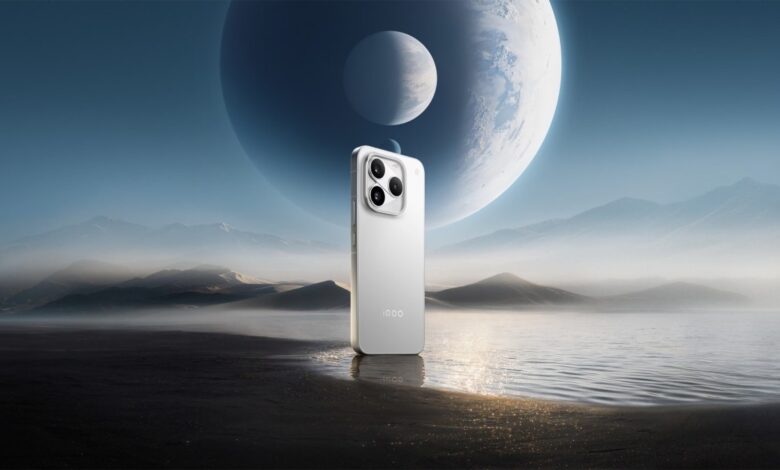
iQOO has also given the 16 a distinctive visual identity. Earlier official previews showed a square-shaped camera module with a raised surrounding lip and a three-camera arrangement.
The flash sits outside the main camera island, while the Light Chaser version features a noticeable hexagonal pattern across its rear panel.
The phone is available in Chasing Light, Legend and Track finishes. Depending on the version, thickness ranges from 8.3mm to 8.55mm, with weight reaching close to 230 grams.
iQOO 16 Price and Availability
The iQOO 16 has officially launched in China, with the 12GB RAM and 256GB storage model starting at CNY 5,999. Higher configurations increase both memory and storage, with the top version offering 16GB of RAM and 1TB of storage.
The company has not yet confirmed global pricing or an international release date. A version of the device has reportedly appeared in European certification records, suggesting that a wider launch could eventually happen, but there is no official global schedule yet.
For now, the iQOO 16 makes its biggest statement through its hardware combination. A 2K 165Hz display, Snapdragon 8 Elite Extreme Gen 6 processor, dedicated gaming chip, advanced cooling and an 8,400mAh battery give the new flagship a specification sheet clearly designed around high performance.
Whether users are interested in mobile gaming or simply want a phone built to handle demanding workloads, the iQOO 16 is entering the flagship market with a very clear hardware identity.