






Samsung Galaxy S27 Ultra Could Switch to Exynos After Snapdragon Overheating Reports
Qualcomm has pushed back against the reports, stating that recent reporting about thermal issues involving the Snapdragon 8 Elite Extreme Gen 6 is inaccurate.

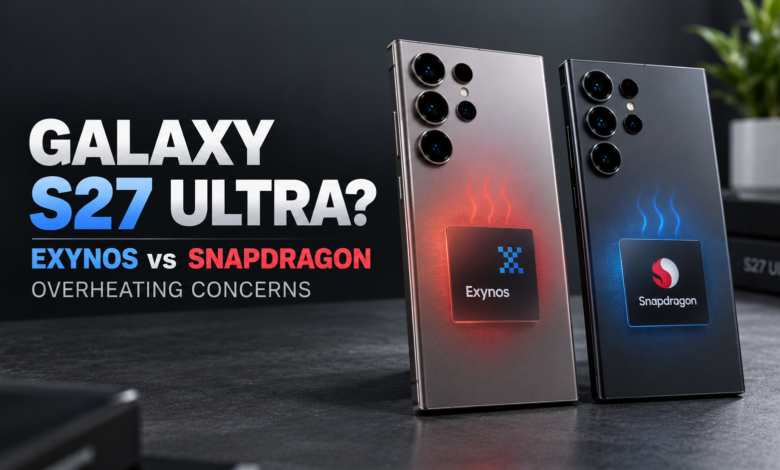
Samsung could be preparing a major change for its next flagship smartphone, with the Galaxy S27 Ultra reportedly facing a possible processor switch from Qualcomm’s Snapdragon to Samsung’s own Exynos chipset. The development follows reports that the upcoming Snapdragon 8 Elite Extreme Gen 6 encountered overheating and performance-throttling issues during Samsung’s internal testing.
If the reports prove accurate, the decision could mark a significant shift in Samsung’s strategy for its most expensive Galaxy S smartphone. The company has relied on Qualcomm’s flagship processors for recent Ultra models, making the possibility of an Exynos-powered Galaxy S27 Ultra particularly noteworthy.
However, the situation remains disputed. Qualcomm has officially denied the overheating allegations, and Samsung has not confirmed that it intends to change the processor planned for its next Ultra flagship.
Snapdragon 8 Elite Extreme Gen 6 Reportedly Faces Thermal Problems
The controversy began with reports claiming that Samsung encountered thermal problems while testing Qualcomm’s next-generation flagship processor for the Galaxy S27 Ultra.
According to the reports, the Snapdragon 8 Elite Extreme Gen 6 repeatedly exceeded temperature thresholds during sustained, demanding workloads. The chip allegedly reduced its processing speed to control heat, a behaviour known as thermal throttling.
Thermal throttling is a protective mechanism used by modern processors. When temperatures rise beyond specified limits, the processor reduces its operating frequency or power consumption to prevent excessive heat from damaging components.
Although this behaviour is normal under certain conditions, frequent or aggressive throttling can affect sustained performance. For smartphone users, that could mean less consistent gaming frame rates, reduced performance during intensive applications, or limitations when recording demanding video formats.
The reports also claimed that Samsung had communicated its concerns to Qualcomm and requested improvements before finalising its processor decision.
However, the alleged test results have not been accompanied by publicly available temperature measurements or detailed testing data. The overheating claims therefore remain unverified rather than established facts.
Qualcomm Denies the Overheating Allegations
Qualcomm has pushed back against the reports, stating that recent reporting about thermal issues involving the Snapdragon 8 Elite Extreme Gen 6 is inaccurate.
Qualcomm executive Don McGuire also rejected the overheating narrative in a public response, saying there were no systemic thermal issues with the Snapdragon 8 Elite Gen 6.
There is an important distinction between the two statements. Qualcomm’s spokesperson specifically addressed the Extreme variant, while McGuire’s response referred to the standard Snapdragon 8 Elite Gen 6. The company has not publicly provided detailed test results that independently settle every aspect of the allegations.

Qualcomm has also highlighted the importance of smartphone manufacturers tuning their platforms for their particular devices. Cooling systems, power limits, firmware, and the internal layout of a phone can all affect how a processor behaves under heavy workloads.
This means that thermal performance cannot be judged by the chipset alone. A processor’s behaviour in one reference design may differ from its behaviour in a finished commercial smartphone.
For now, Qualcomm’s position is clear: it disputes the reported thermal problems. The original claims, meanwhile, have not been independently verified.
Could Samsung Choose the Exynos 2700 Instead?
The most significant consequence of the reported testing concerns is the possibility that Samsung could use its own Exynos 2700 processor in the Galaxy S27 Ultra.
The Exynos 2700 is expected to be Samsung’s next-generation flagship mobile chipset. Reports suggest that the company is evaluating its performance as a potential alternative to Qualcomm’s processor.
Using an in-house chipset could offer Samsung greater control over hardware development and integration. It could also help the company reduce reliance on an external supplier, although any financial benefits would depend on manufacturing costs, yields, development expenses, and production volumes.
For the Galaxy S27 Ultra, the central question would be whether the Exynos 2700 can deliver the required performance, thermal stability, battery efficiency, and reliability.
A flagship smartphone must do more than produce strong short-duration benchmark scores. It needs to sustain performance during demanding games, camera workloads, multitasking, and AI-powered tasks without excessive heat or battery drain.
Samsung would also need to ensure that its processor performs consistently with the phone’s software and other hardware components.
At this stage, no official announcement confirms that the Exynos 2700 will replace Qualcomm’s chip in the Galaxy S27 Ultra. The possibility remains based on reports about Samsung’s internal evaluation.
Why This Could Be a Major Change for Galaxy Ultra Phones
Samsung’s Galaxy S Ultra models occupy the top end of its smartphone lineup. Buyers expect these devices to offer the company’s most advanced cameras, displays, performance, and productivity features.
The processor is a central part of that experience because it affects everything from gaming and application responsiveness to image processing and power consumption.
A move to Exynos would therefore attract considerable attention, especially among buyers who have strong preferences for Qualcomm’s Snapdragon processors.
However, the name of the processor alone does not determine whether a smartphone is better. The final experience depends on the chipset’s architecture, manufacturing process, power management, cooling system, and software optimisation.
If the Exynos 2700 delivers competitive sustained performance and efficiency, it could provide Samsung with a viable alternative. Conversely, if it falls short of the company’s requirements, Samsung may prefer to continue working with Qualcomm.
The decision will ultimately depend on the performance and reliability of the final hardware rather than the processor branding alone.
Exynos 2700 Could Also Help Samsung Reduce Costs
Another possible reason for considering Exynos is cost control.
Purchasing flagship processors from an external supplier can represent a significant expense, particularly when a manufacturer sells millions of premium smartphones. Developing and using an in-house chipset could provide Samsung with greater control over some aspects of its supply chain.
It could also strengthen the role of Samsung’s semiconductor division by increasing the use of its own mobile processors.
However, developing a competitive flagship chipset is expensive and technically challenging. Manufacturing costs, production yields, software support, and long-term development all influence whether an in-house processor delivers financial advantages.
It is therefore too early to conclude that a potential Exynos switch would automatically make the Galaxy S27 Ultra cheaper. Samsung could use any savings to improve margins, invest in other hardware features, or offset costs elsewhere in the device.
No official pricing information for the Galaxy S27 Ultra has been announced.
What This Means for Galaxy S27 Ultra Buyers
For consumers planning to purchase Samsung’s next Ultra smartphone, the reported processor uncertainty creates several unanswered questions.
The first is whether the Galaxy S27 Ultra will use Snapdragon, Exynos, or different chipsets in different markets. Samsung has not confirmed the final configuration, so buyers should avoid treating either option as guaranteed.
The second is performance. Until retail devices are available for independent testing, there is no reliable basis for concluding that one processor will necessarily deliver better battery life, cooler temperatures, or higher sustained performance in the finished phone.
The third is regional availability. Samsung has historically varied chipset choices across parts of its Galaxy S lineup, but the final distribution for the Galaxy S27 family remains unconfirmed.
Potential buyers should therefore wait for official specifications and independent reviews before making decisions based on the current reports.
Galaxy S27 Ultra Launch Still Lies Ahead
Samsung has not officially announced the Galaxy S27 Ultra’s full specifications, processor configuration, or launch date. The device is expected to arrive in 2027, but its final hardware details remain subject to confirmation.
The reported overheating dispute adds another development to the early discussion surrounding Samsung’s next flagship series. Nevertheless, it does not establish that Qualcomm’s processor is defective or that Samsung has already decided to abandon it.
Both companies could continue refining the hardware and software before the final device enters production. Samsung may also evaluate multiple configurations before settling on its final chipset strategy.
More concrete information will be needed to determine whether the Exynos 2700 becomes a genuine alternative for the Ultra model.
Final Verdict
The Galaxy S27 Ultra could face a major processor decision following reports that Qualcomm’s Snapdragon 8 Elite Extreme Gen 6 encountered overheating and throttling during Samsung’s internal testing.
Samsung’s Exynos 2700 has emerged as a possible alternative, potentially giving the company more control over its flagship hardware and chipset supply. However, Qualcomm has denied the reported thermal problems, and Samsung has not confirmed a processor switch.
For now, the story remains a developing news report based on disputed claims. The Galaxy S27 Ultra’s final chipset, performance, and regional configurations will become clearer only when Samsung officially reveals the device.