






Samsung Reportedly Cuts Galaxy A Production by 20% as Smartphone Costs Surge
The report suggests that memory components now account for more than half the manufacturing cost of some budget smartphones.

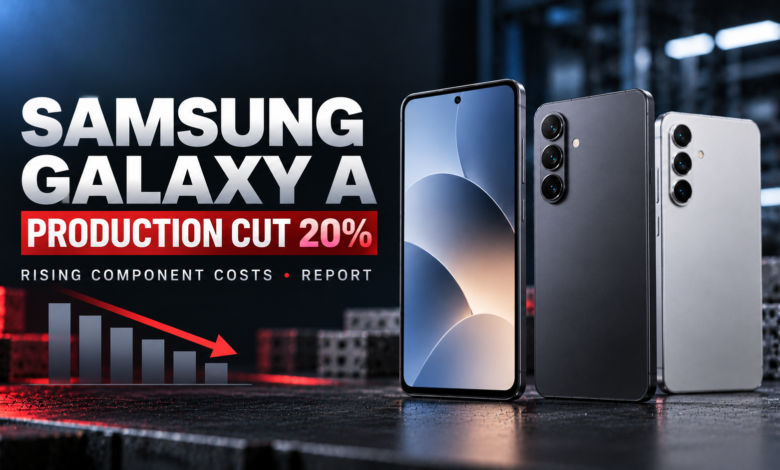
Samsung’s affordable smartphones could become more expensive as rising component costs force the company to rethink its production strategy. According to a new report, Samsung is cutting its Galaxy A series production target by around 20% for the fourth quarter of 2026, potentially affecting millions of budget and mid-range smartphones. The company is also reportedly considering further production cuts next year, raising questions about the future pricing and availability of its popular Galaxy A lineup.
The reported decision comes as smartphone manufacturers face increasing memory prices and growing competition for essential electronic components. Samsung is said to be shifting more resources towards its premium Galaxy S and Galaxy Z devices, which generally offer higher profit margins.
However, Samsung has not officially confirmed the reported production cuts. The potential effects on individual smartphone models, regional availability and retail prices therefore remain uncertain.
Samsung Galaxy A Production Could Fall by 20%
According to the report, Samsung has reduced its planned production of Galaxy A smartphones for the fourth quarter of 2026, covering October through December.
The reported reduction is approximately 20% compared with the production plan established earlier in the year. This distinction is important: the figure refers to a reduction against Samsung’s original target, rather than a confirmed 20% year-on-year decline in actual sales.
An industry source reportedly indicated that component orders for the quarter had fallen by around 20%. The change could translate into approximately 10 million fewer smartphones over the full year, according to the report.
Another source suggested that Samsung could reduce Galaxy A production by more than 10% in 2027 as well.
If these reports prove accurate, the changes could represent a significant adjustment to Samsung’s smartphone strategy. The Galaxy A series serves customers looking for affordable and mid-range devices, making it an important part of the company’s global smartphone business.
Nevertheless, the reported figures should be treated as estimates based on industry sources rather than confirmed production numbers.
Why Is Samsung Reportedly Reducing Galaxy A Production?
Rising memory prices appear to be one of the main reasons behind the reported decision.
Modern smartphones depend on memory components for storing applications, photos, videos and other data, as well as temporarily handling information while applications run. When memory prices increase sharply, manufacturers can face considerable pressure on their production costs.
The report suggests that memory components now account for more than half the manufacturing cost of some budget smartphones.

This creates a difficult situation for manufacturers operating in the affordable segment. Customers shopping for lower-priced phones are often particularly sensitive to price increases, making it challenging for brands to pass every additional manufacturing expense on to buyers.
Samsung must therefore decide whether to absorb higher costs, increase retail prices, adjust hardware specifications or reduce production of less profitable models.
The reported Galaxy A production cuts suggest the company may be prioritising profitability over maintaining its previous production volumes.
AI Demand Is Adding Pressure to Component Supplies
Memory prices are not the only reported concern. Competition for other essential components is also increasing as the technology industry invests heavily in artificial intelligence infrastructure.
Printed circuit boards, or PCBs, connect the various electronic components inside smartphones. Multilayer ceramic capacitors, commonly known as MLCCs, help regulate and stabilise electrical behaviour in electronic devices.
These components are used across many products, including smartphones, computers and AI-related hardware.
As demand for AI chips and associated infrastructure grows, manufacturers and suppliers may prioritise components used in higher-value products. This can make it more difficult or expensive to secure supplies for consumer electronics.
Samsung has historically benefited from its position in the electronics supply chain, which has helped it maintain smartphone production despite component shortages.
However, the reported situation suggests that access to components alone may no longer be enough to protect the profitability of its lower-priced smartphones.
If the company cannot produce Galaxy A devices at attractive margins, redirecting limited resources towards premium products could become a more appealing option.
Samsung Could Prioritise Galaxy S and Galaxy Z Flagships
The reported production strategy could benefit Samsung’s more expensive smartphone families.
The Galaxy S series represents the company’s conventional flagship smartphones, while the Galaxy Z lineup includes its foldable devices. Both product families generally occupy higher price categories than the Galaxy A range.
Premium smartphones can provide manufacturers with greater revenue per device, although their development and production costs are also substantial.
By prioritising components for the Galaxy S and Galaxy Z series, Samsung could attempt to protect its profit margins while navigating higher memory prices and supply constraints.
This would not necessarily mean that Samsung is abandoning its affordable smartphone business. Instead, the reported changes could reflect an effort to adjust production according to the profitability of different product categories.
However, the strategy carries risks. Reducing the number of affordable phones available could weaken Samsung’s competitiveness in markets where buyers prioritise value for money.
Rivals offering similarly priced devices could potentially benefit if Samsung’s popular models become more expensive or harder to find.
Why the Galaxy A Series Matters So Much
The Galaxy A series plays a major role in Samsung’s overall smartphone business.
According to the report, these devices account for approximately 70% of Samsung’s smartphone shipments. The lineup includes budget and mid-range models such as the Galaxy A17 5G, Galaxy A37 and Galaxy A57.
These smartphones help Samsung reach customers who do not want to pay flagship prices but still want a recognised brand, modern features and access to the Android ecosystem.
The series is also important to Samsung’s competition with Apple for the position of the world’s largest smartphone manufacturer by shipment volume.
Samsung ships approximately 230 million to 240 million smartphones annually, according to the reported figures. A substantial reduction in Galaxy A production could therefore influence its overall shipment numbers.
An industry forecast published in August reportedly projected that Samsung could narrowly overtake Apple in global smartphone shipments during 2026, with a difference of just 0.1 percentage points.
That margin illustrates how competitive the global smartphone market has become. Even a relatively small change in production or demand could affect the final rankings.
However, the reported production cuts do not automatically mean Samsung will lose its position. Actual results will depend on consumer demand, flagship sales, competitors’ performance and the number of devices ultimately shipped.
Could Future Galaxy A Phones Become More Expensive?
One of the biggest concerns for consumers is the possibility of higher smartphone prices.
An industry insider reportedly warned that lower production volumes and rising component costs could push the launch prices of future Galaxy A models higher.
Manufacturers facing higher costs generally have several options. They can increase retail prices, accept lower profit margins, reduce manufacturing expenses or modify hardware specifications.
The report raises the possibility that future Galaxy A phones could arrive with less impressive displays or cameras while still costing more than their predecessors.
For example, a manufacturer might choose a less expensive display panel or camera component to keep production costs under control. However, there is currently no confirmation that Samsung plans to make these specific changes to upcoming Galaxy A devices.
The possibility of price increases also does not mean every model will become more expensive. Samsung could adopt different strategies depending on the device, market and competitive conditions.
For consumers, the important factor will be whether future models provide meaningful improvements in performance, battery life, camera quality and software support relative to their prices.
What This Means for Smartphone Buyers in India
India is an important market for affordable and mid-range Android smartphones, making any potential changes to Galaxy A production worth watching.
If Samsung reduces production while demand remains strong, some models could experience tighter availability. Higher component costs could also contribute to price increases for future devices.
However, the current reports do not establish which Indian models might be affected, whether local production targets will change or when consumers could notice any difference.
There is also no confirmed evidence that Samsung will immediately raise the prices of existing Galaxy A smartphones because of the reported production adjustment.
Buyers should therefore avoid assuming that every Galaxy A phone will become more expensive or disappear from stores.
Anyone planning to purchase a smartphone should compare current prices, specifications, software support and competing models rather than making a decision based solely on unconfirmed production reports.
Samsung’s Smartphone Strategy Faces a Difficult Balancing Act
The reported Galaxy A production cuts highlight the challenge smartphone manufacturers face when component costs rise faster than customers are willing to pay.
Samsung needs to protect its profitability while maintaining a strong presence in the affordable segment. Producing fewer lower-margin devices could help control costs, but it could also create opportunities for competitors.
The company must balance the financial advantages of premium smartphones against the importance of its budget and mid-range lineup.
For now, the reported 20% reduction applies to the Galaxy A series’ fourth-quarter production plan compared with the original target. Further cuts of more than 10% in 2027 have also been reported, but Samsung has not officially confirmed these plans.
If the reports are accurate, Samsung could be entering a period in which affordable Galaxy phones become more expensive or offer fewer hardware upgrades. Whether that happens will depend on component prices, supply conditions, Samsung’s production decisions and competition across the smartphone market.